If your ideal home includes morning turnout, nearby riding trails, and enough land to support both horses and daily life, Litchfield County deserves a closer look. For many buyers, the appeal is not just a pretty rural setting. It is the combination of preserved land, horse-friendly recreation areas, and practical property features that can make equestrian living feel more workable. In this guide, you’ll get a clear look at what makes the area appealing, what to evaluate in a horse property, and why smart due diligence matters before you buy. Let’s dive in.
Why Litchfield County Attracts Equestrian Buyers
Litchfield County stands out because equestrian living here can extend beyond your own fence line. Connecticut DEEP states that equestrians are welcome on multi-use trails and forest roads unless otherwise posted. That creates real value for buyers who want access to riding opportunities in addition to private turnout and barn space.
Several well-known public recreation areas support that lifestyle. The White Memorial Conservation Center offers 40 miles of trails across 4,000 acres, and many of those trails are open to biking and horseback riding. Topsmead State Forest, a 510-acre state forest, also lists horseback riding as a supported activity.
For you as a buyer, that means a horse property in this area may function as more than a place to keep animals. It can serve as a home base for riding, turnout, and enjoying a landscape shaped by preserved land and trail access. That broader lifestyle appeal is a big reason equestrian buyers continue to look closely at this part of Connecticut.
What to Look for in a Horse Property
Not every rural property is truly set up for horses. A beautiful house on acreage may still need meaningful improvements if the land layout, fencing, or utility systems do not support equestrian use. That is why it helps to evaluate the site as carefully as the home itself.
UConn Extension notes that horses weighing about 1,000 to 2,000 pounds generally need around 1.5 to 2 acres if pasture is expected to provide all nutrition. If a property has less usable acreage, pasture often works more as exercise space, and a sacrifice area becomes especially important.
Acreage and Usable Land
The total acreage on a listing does not always tell the whole story. You will want to understand how much of the land is actually usable for turnout, pasture, circulation, and support areas. Wet areas, steep slopes, and awkward layouts can reduce the practical function of a property.
If you plan to rely on pasture in a meaningful way, the acreage calculation matters. If not, you may still be able to make a smaller property work with thoughtful management, especially if there is room for exercise space and a dry lot or sacrifice paddock.
Barn and Stable Setup
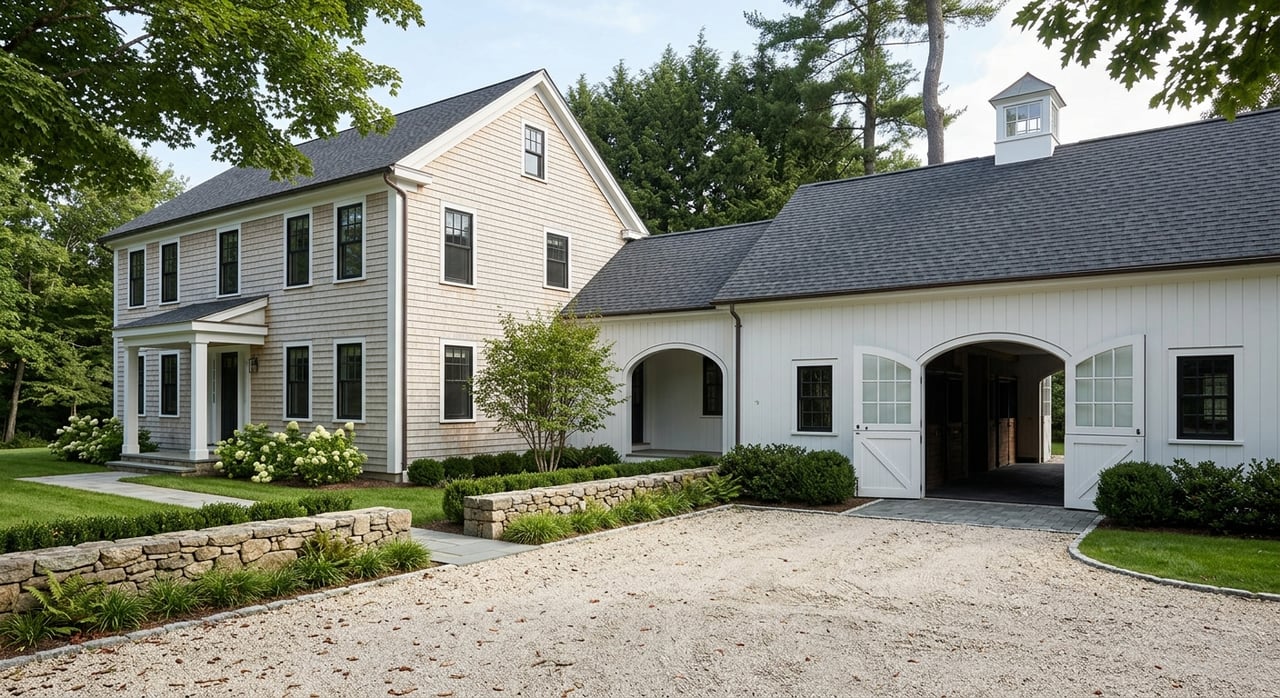
A barn is not just a bonus structure. It is part of the daily working system of the property. As you tour homes, consider whether the barn layout supports the number of horses you plan to keep and whether the site allows easy movement between stalls, turnout, and storage areas.
You may also want to look for practical features such as trailer access, trailer parking, and space for feed and equipment. These details affect daily use as much as bedroom count or kitchen finishes affect the house.
Fenced Turnout and Riding Space
Adequate fencing is a core part of horse property function. In the Town of Litchfield, horses kept for personal use must be contained by adequate fencing. That makes turnout planning both a practical and regulatory issue.
Some buyers also prioritize a riding ring or flat-work area. While not every property will have one in place, enough level space to create or improve a training area can be a major advantage.
Manure and Sacrifice Areas
One of the most overlooked parts of equestrian property evaluation is manure management. UConn states that one horse produces about 40 to 50 pounds of manure per day, or about 7 to 9 tons per year. That volume has real implications for storage, drainage, maintenance, and neighbor relations.
UConn also recommends manure storage more than 200 feet from surface water and private wells and more than 500 feet from public wells. Sacrifice areas should be near the barn but away from wells, wetlands, and water bodies, with daily manure removal helping reduce mud and runoff. If a property has no clear plan for these functions, you may need to budget for improvements.
Why Zoning Matters So Much
In equestrian real estate, zoning can shape what you can actually do with a property. You cannot assume that because a parcel looks rural, it automatically supports your intended horse use. Rules can vary by town and by the specific use you have in mind.
The Town of Litchfield’s zoning regulations, effective April 15, 2025, include a dedicated section for the keeping of horses for personal use. Under those rules, resident-occupied horses are allowed, but they must be owned by the occupants and not kept for gain except for limited temporary boarding. A permit from the Zoning Enforcement Officer is also required.
Personal Horse Use Standards
For personal use in Litchfield, the first horse requires 2 acres, and each additional horse requires 0.5 acre. The same regulations state that stable manure must not create a health hazard. They also require a stable to be at least 50 feet from an adjacent dwelling.
These standards show why parcel-level review is so important. Even if a property appears ideal at first glance, the lot layout, barn placement, and total acreage may affect whether it fits your plans cleanly.
Commercial Horse Uses Are Different
If you are considering a property with a larger-scale equestrian setup, separate standards may apply. Litchfield’s regulations for a commercial stable require at least 10 acres for barns, riding rings, corrals, and accessory facilities. They also address off-street parking, screened manure storage, and limits on temporary horse-stabling trailers.
That distinction matters because a personal-use setup and a commercial or semi-commercial use are not treated the same way. Before moving forward, it is wise to confirm how the current use is classified and whether your intended use matches local regulations.
Local Review Is Essential
The Town of Litchfield Land Use Department regulates zoning, subdivision development, wetlands, and aquifer protection. It also administers the Planning and Zoning, Conservation, and Inland Wetlands Commissions. For you as a buyer, that means broad assumptions are risky.
Instead, each property should be reviewed on its own facts. The right parcel for one buyer’s goals may not work for another buyer’s horse count, barn plans, or intended improvements.
Farm Classification and Tax Questions
Some equestrian buyers also ask whether a property may have a farm component for tax classification purposes. Connecticut’s statutory definition of agriculture includes the raising, caring for, training, and management of livestock, including horses. That creates a framework worth understanding if the property has a genuine farm use.
Connecticut Public Act 490 is the state’s current-use tax law for farm, forest, and open-space land. The Connecticut Department of Agriculture directs owners to the town assessor for applications, and the state provides assessor forms for farmland classification and for certain farm machinery, horses, or ponies exemptions.
This is not something to assume from a listing description alone. If tax treatment is important to your purchase decision, it is worth verifying the current classification and asking what documentation may be needed after closing.
Due Diligence for Equestrian Homes
Horse properties usually need a deeper level of due diligence than a standard residential purchase. Beyond the home inspection, you may need to evaluate the land, utility systems, and support infrastructure that affect both household living and horse care. This step can help you avoid surprises after closing.
Connecticut DPH says private well owners are responsible for water quality. The agency recommends annual basic-indicator testing, testing when buying a house, and testing again after repair or replacement of the well, pump, or water pipes.
Wells and Water Supply
If the property relies on a private well, water testing should be part of your review. This is especially important on equestrian properties, where water use may be more demanding than on a typical home site. A well that works for household use still needs to be evaluated in the context of overall property demands.
You will also want to look at the well’s relationship to barns, manure storage, and turnout areas. Site layout matters when you are thinking about water quality and long-term property function.
Septic System Review
Connecticut DPH’s home buyers guide for septic systems recommends asking for septic as-built drawings and maintenance records. It also suggests inspecting the property for drainage and saturation problems, reviewing the town health department file, and hiring a septic engineer or licensed installer when needed.
That advice becomes even more important on a horse property, where drainage patterns and daily use can affect how different parts of the site perform. If you see signs of wet ground, runoff issues, or unclear system history, more investigation is usually worth it.
Build the Right Specialist Team
Equestrian purchases often benefit from specialists who understand more than the house itself. Based on the local and state guidance in the research, the most useful team may include a land-use or zoning contact, a local health department or sanitarian, a septic professional, a private well testing lab, a surveyor, and an equine-savvy barn or pasture consultant.
That kind of team helps you evaluate the property as a working whole. It can also give you a clearer picture of what is already in place, what may need upgrades, and what questions to answer before you commit.
How to Buy with More Confidence
If you are exploring equestrian living in Litchfield County, the goal is not just to find a house with a barn. It is to find a property that fits how you want to live and ride, while also making sense from a land-use and maintenance standpoint. The best opportunities usually balance scenery, functionality, and realistic due diligence.
That is where local guidance makes a difference. When you understand trail access, acreage needs, zoning rules, and property systems early in the process, you can focus your search on homes that truly match your goals. In a market where details matter, that clarity can save time and help you make a stronger decision.
Whether you are looking for a private horse property, a country estate with room to grow, or land with long-term potential, working with a team that understands western Connecticut can make the process much smoother. If you are ready to explore equestrian opportunities in and around Litchfield County, The Brokerage of New England can help you evaluate properties with a practical, local perspective.
FAQs
What makes Litchfield County appealing for equestrian living?
- Litchfield County offers access to preserved land and horse-friendly recreation areas, including White Memorial Conservation Center and Topsmead State Forest, where horseback riding is supported.
How much land do you need for horses in Litchfield County?
- UConn Extension states that horses weighing about 1,000 to 2,000 pounds generally need around 1.5 to 2 acres if pasture is expected to provide all nutrition, though actual needs depend on how the land will be used.
What are the Town of Litchfield rules for keeping horses for personal use?
- The Town of Litchfield requires 2 acres for the first horse, 0.5 acre for each additional horse, adequate fencing, a permit from the Zoning Enforcement Officer, and a stable setback of at least 50 feet from an adjacent dwelling.
What should buyers check on a Litchfield County horse property?
- Buyers should review usable acreage, fencing, barn layout, manure storage, sacrifice areas, trailer access, private well testing, septic records, drainage, and parcel-specific zoning rules.
Do equestrian properties in Connecticut need special due diligence?
- Yes. Compared with a standard home purchase, equestrian properties often require added review of zoning, wells, septic systems, drainage, pasture layout, and manure management.