If you are thinking about buying an investment property in Litchfield County, the first thing to know is simple: this is not one market. It is a patchwork of town-by-town opportunities, price points, and rental patterns. When you understand that local structure, you can underwrite more carefully, avoid costly assumptions, and spot the opportunities that actually fit your goals. Let’s dive in.
Why Litchfield County Works Differently
Litchfield County is often discussed like a single market, but Connecticut does not operate with county government in the way many buyers expect. The state notes that counties are geographic divisions only, which means real estate decisions like taxes, permitting, and rental compliance are handled at the municipal level.
For you as an investor, that matters right away. A property in one town can carry very different tax implications, land-use rules, and rental realities than a similar-looking property a short drive away. That is why broad county averages can be useful for context, but not enough for a purchase decision.
What the Current Market Tells You
Current county-level listing data shows a median listing home price of $469,000, median days on market of 29, active listings of 718, and a median rent of about $2.3K. Those numbers give you a starting point, but the wider story is the spread between towns.
Nearby town pricing shows how varied this area can be. Torrington is around $282,625, while New Milford is around $563,200, Litchfield is around $555,000, and Salisbury is around $975,000. That gap is a strong signal that one investment strategy will not fit every part of the county.
Think in submarkets, not county lines
If you are looking for stronger cash flow potential on a lower entry price, a town with a lower cost basis may deserve closer attention. If you are targeting a lifestyle-driven or seasonal market, higher-priced towns may offer a very different kind of play.
The key is not to assume one town's numbers apply to another. In Litchfield County, your success often comes down to choosing the right submarket before you choose the property.
What Property Types You Are Most Likely to Find
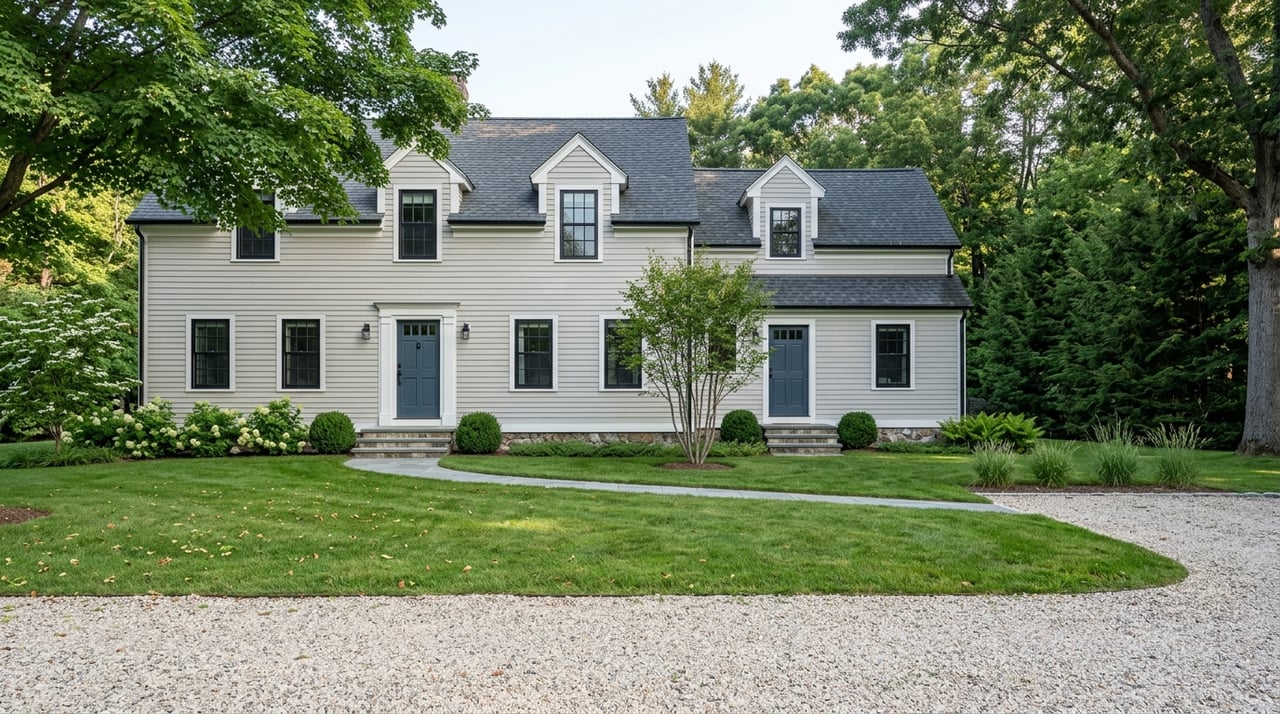
Many investors imagine they will find a steady stream of duplexes, triplexes, and small apartment buildings. In reality, parts of Litchfield County, including New Milford data from the Census, show housing stock that is dominated by single-unit detached homes, with much smaller shares of 2-, 3-, and 4-unit properties.
That means your search may turn up more single-family rental opportunities than traditional small multifamily inventory. If your plan depends on a classic multifamily setup, you may need to be more selective about town centers or denser village areas where that type of stock is more likely to appear.
Single-family rentals may be the real opportunity
For many buyers, detached homes are the most realistic entry point into the local investment market. These properties may align better with the housing stock you will actually see on the ground.
Mixed-use and small multifamily opportunities can still exist, but they are more location-specific. Before you assume a property can be converted, expanded, or used in a certain way, you should verify land-use rules, parking requirements, and site-specific constraints with the town.
How to Research Rent More Accurately
Rent research in Litchfield County needs more than a quick glance at a county median. The current median rent of about $2.3K is useful, but it can hide major variation between towns, neighborhoods, and even ZIP codes.
HUD's FY2024 Fair Market Rent schedule for Litchfield County lists these benchmarks:
- 1-bedroom: $1,160
- 2-bedroom: $1,484
- 3-bedroom: $1,819
- 4-bedroom: $2,024
These are program benchmarks, not a promise of what your property will command. Still, they give you a helpful affordability reference point when you compare a specific rental to active local lease comps.
County averages can hide sharp local differences
Litchfield town offers a good example of why local rent research matters. Current data shows a median rental price around $3,925, while some listed ZIP codes in the same town show rents around $1,650 to $1,700.
That kind of spread tells you something important. A property near a town center, lake area, or another high-demand pocket may perform very differently from a more rural parcel or a premium property serving a different renter profile.
A smarter rent-check process
Before you buy, compare three things:
- Current lease comps for similar properties in that town
- HUD rent benchmarks for added context
- The likely renter profile for that specific location
That process gives you a more grounded view of demand. It can also help you avoid overestimating rent based on a countywide average that does not reflect your exact submarket.
How to Underwrite Taxes and Holding Costs
Taxes are one of the biggest places where new investors can make mistakes in Litchfield County. In Connecticut, property tax is calculated by multiplying the assessment by the mill rate and dividing by 1,000.
The state also makes clear that mill rates vary by town, and tax-bill questions should go to the tax collector in the municipality where the property is located. Assessment is handled by the town assessor, not by a county office.
Why town-by-town tax research matters
Two properties with similar prices can carry very different tax costs if they sit in different towns. If you underwrite taxes using a broad estimate instead of the actual local mill rate and assessment context, your projected returns can shift fast.
This is one of the clearest reasons to build your model around the town first. In this market, municipal details are not a side note. They are a core part of the deal.
Rental Rules You Should Budget For
If you plan to hold a long-term rental, Connecticut's security deposit rules should be part of your cash flow planning. The Connecticut Department of Banking says a landlord generally cannot require more than two months' rent as a security deposit.
For tenants age 62 or older, that cap is reduced to one month's rent. Security deposits must be held in a Connecticut financial institution, and landlords owe interest on them.
Why these rules matter to investors
These are not just technical details. They affect move-in funds, reserve planning, and how you structure the financial side of your rental operation.
When you model your investment, include realistic assumptions for setup costs, turnover, reserves, and compliance. A property that looks attractive on paper can feel different once the real operating details are added in.
Building the Right Local Team
Because there is no county government office managing these questions for you, your local team matters even more. A strong investment purchase in Litchfield County usually depends on getting town-specific answers early.
A practical team may include:
- The town assessor
- The town tax collector
- A Connecticut real estate attorney
- A home inspector
- A contractor
- An insurance broker
- A property manager for buy-and-hold rentals
Local knowledge is a real advantage
This is where boutique guidance can make a difference. When you are comparing towns, property types, and holding costs, local insight helps you move beyond headline numbers and focus on what fits your actual investment goals.
That is especially true in western Connecticut, where town-level differences can shape everything from acquisition strategy to long-term performance.
Questions to Ask Before You Buy
If you want to narrow your options quickly, start with a few practical questions. These can help you compare properties more clearly and avoid assumptions that do not hold up in this market.
Ask yourself:
- Which town matches my budget and target return?
- Am I buying a single-family rental or waiting for true multifamily inventory?
- What do current local rent comps say, not just county averages?
- How do the town's taxes affect my monthly numbers?
- Are there local land-use or parking issues I need to verify?
- Does this property fit a year-round rental strategy, a seasonal angle, or a different niche?
The more specific your questions, the better your decisions tend to be. In Litchfield County, general research gets you started, but town-level research helps you buy well.
A Practical Investment Approach for Litchfield County
If you are entering this market for the first time, it often makes sense to stay disciplined and local in your analysis. Start with a town that matches your budget, identify the property type you are most likely to find there, and then pressure-test rent, taxes, and compliance details before you make an offer.
This approach may sound basic, but it is often what separates a thoughtful acquisition from an emotional one. In a market with wide price variation and municipal-level rules, clarity beats speed.
If you want help evaluating towns, comparing property types, or sizing up an investment opportunity in western Connecticut, The Brokerage of New England offers relationship-driven guidance backed by deep local market knowledge. Request a complimentary market consultation and start your search with a team that understands how nuanced this region can be.
FAQs
What makes investing in Litchfield County different from other areas?
- Litchfield County works as a collection of town markets, not one unified county-run market, so taxes, permitting, and rental details should be researched town by town.
What property type is most common for investors in Litchfield County?
- In many parts of the county, single-family detached homes are more common than small multifamily buildings, so many investors will encounter detached rental opportunities first.
What are current rent benchmarks in Litchfield County?
- HUD FY2024 Fair Market Rents list about $1,160 for a 1-bedroom, $1,484 for a 2-bedroom, $1,819 for a 3-bedroom, and $2,024 for a 4-bedroom, while current county median rent is around $2.3K.
How are property taxes calculated for Litchfield County investment properties?
- In Connecticut, property tax is calculated by multiplying the assessment by the town's mill rate and dividing by 1,000, with tax and assessment handled at the municipal level.
What security deposit rules apply to Connecticut rental properties?
- A landlord generally cannot require more than two months' rent as a security deposit, or more than one month's rent for a tenant age 62 or older, and deposits must be held in a Connecticut financial institution with interest owed.
What professionals should I have on my Litchfield County investment team?
- A strong team may include the town assessor, town tax collector, Connecticut real estate attorney, inspector, contractor, insurance broker, and a property manager if you plan to hold rentals.